The Role of Compressed Air in Transportation Operations
Transportation facilities rely on compressed air to support a wide range of maintenance, service and operational tasks. In fleet maintenance centers, bus depots, rail workshops, airport service areas and vehicle repair facilities, compressed air is used for pneumatic tools, tire inflation, cleaning and blowing applications, equipment servicing and the inspection, testing and servicing of vehicle air systems.
In the transportation sector, compressed air is also connected to vehicle-integrated pneumatic systems, such as air brakes, pneumatic doors and air suspension systems. These systems are operated by the vehicle’s own compressed air system, while workshop compressed air supports the maintenance, testing and inspection processes around them.
Because transportation environments often operate with changing air demand throughout the day, the compressed air system must be designed for stable pressure, reliable air delivery, proper moisture control and efficient operation. When pressure becomes unstable, moisture reaches air lines, leaks are left untreated or the compressor cannot keep up with demand, the result can be slower work, equipment wear, service delays and higher energy consumption.
For transportation operators, compressed air should be treated as part of the facility’s core service infrastructure, not only as a utility. Correct compressor sizing, air treatment, leak management and ongoing service all contribute to safer, more efficient and more reliable maintenance operations.
EL-AV Compressors supports transportation companies, fleet operators and maintenance facilities with compressed air systems that may include air compressors, dryers, filtration, condensate drains, air receivers, system design, maintenance and repair services.
Where Compressed Air Is Used in Transportation Facilities
Compressed air is used across many types of transportation operations. The exact system requirements depend on the size of the facility, the number of workstations, the duty cycle and the type of equipment connected to the air system.
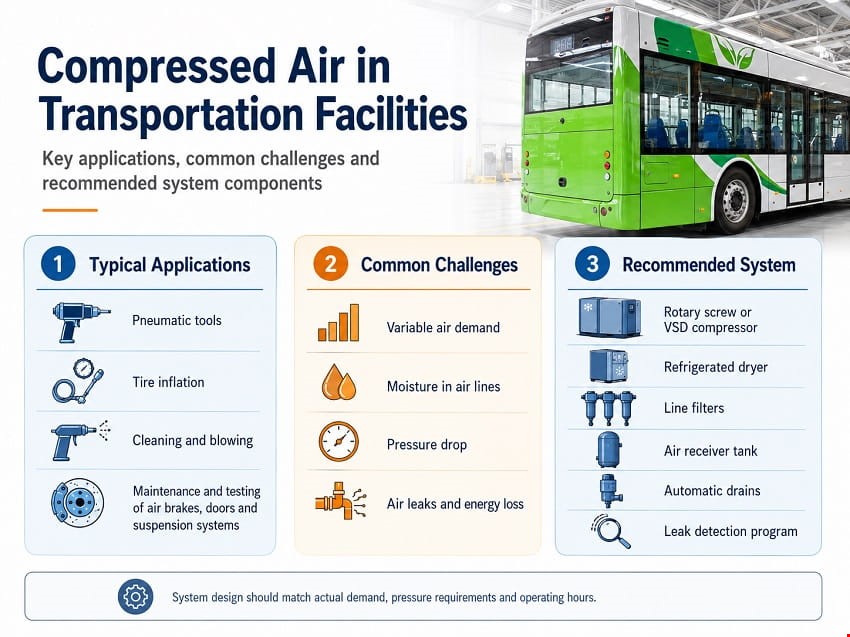
Common applications include:
- Pneumatic tools for vehicle repair and maintenance
- Tire inflation stations
- Cleaning and blowing applications
- Workshop equipment and service tools
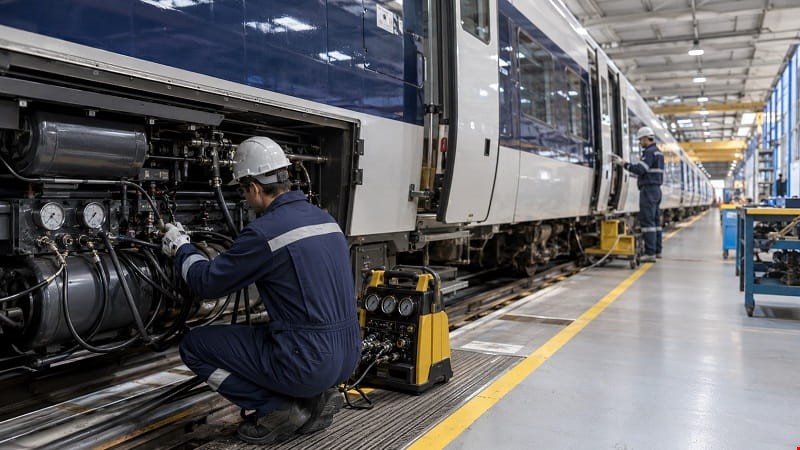
- Rail and fleet maintenance operations
- Bodywork and mechanical service areas
- Inspection, testing and maintenance of air brake systems
- Pneumatic door and suspension system servicing
- General maintenance in bus depots, garages and airport-related service facilities
- Air-powered equipment used in daily operational routines
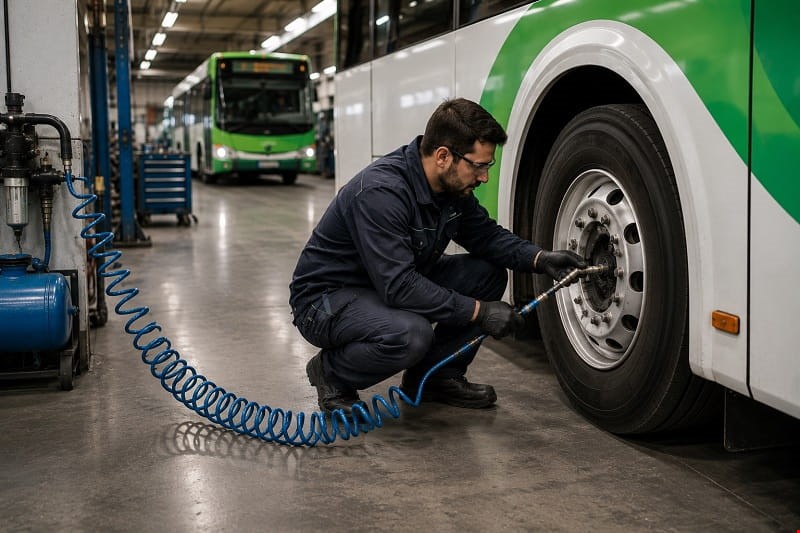
In smaller service areas, a piston compressor may be suitable for intermittent use and basic workshop tasks. In larger transportation facilities with continuous demand, multiple workstations, long operating hours or changing air demand throughout the day, a rotary screw compressor, and in many cases a VSD screw compressor, may be a better fit because it can support more stable and efficient operation.
Key Compressed Air Challenges in Transportation Environments
Transportation facilities often operate under demanding conditions. The compressed air system may serve many users at the same time, with varying demand throughout the day. This makes correct sizing, pressure stability, air treatment, leak management and energy-efficient control especially important.
Unstable Air Demand
A transportation workshop may have several technicians using air tools simultaneously, while demand may decrease during quieter periods. If the compressor is not properly matched to the facility's actual air consumption, the system may cycle too frequently, struggle to maintain pressure or consume more energy than necessary.
In facilities with fluctuating air demand, a Variable Speed Drive compressor can be an effective solution. Instead of running only at fixed output levels, a VSD compressor adjusts its speed according to actual air demand. This can help reduce unnecessary energy consumption, improve pressure stability and support facilities where air usage changes throughout the working day.
Moisture in Air Lines
Moisture is one of the most common problems in compressed air systems. In transportation facilities, water in the air line can affect pneumatic tools, damage equipment, reduce reliability and increase maintenance requirements. Air dryers, filters and proper drainage help protect the system and improve air quality at the point of use.
Pressure Drop Across the Facility
Long piping routes, undersized pipes, clogged filters, untreated leaks or high simultaneous demand can create pressure drops. When this happens, tools may lose performance, maintenance work may slow down and operators may increase system pressure to compensate. This can increase energy consumption and mask the underlying issue.
Air Leaks and Energy Loss
Compressed air leaks are one of the most common sources of energy waste in industrial and workshop environments. Even small leaks in hoses, couplings, valves, filters, drains or distribution lines can cause the compressor to work harder than necessary.
In transportation facilities, leak detection should be part of the routine maintenance program. A structured leak inspection can help identify hidden air losses, reduce unnecessary compressor load, improve pressure stability and lower operating costs. After leaks are repaired, the system should be rechecked to confirm that pressure behavior and compressor cycling have improved.
High Operating Hours
Fleet service centers, rail maintenance facilities and busy workshops often operate for long hours every day. In these cases, compressor reliability, ease of maintenance, cooling, air treatment and preventive maintenance become essential to keeping operations running efficiently.
Energy Waste
Compressed air can become a significant operating expense when leaks, pressure losses, poor control strategies or unsuitable compressor sizing are ignored. A professional system assessment can help identify inefficiencies and improve the operational and energy performance of the system.
In many transportation facilities, energy performance can be improved by combining the right compressor size, VSD technology where suitable, leak detection, pressure optimization, clean filters, effective drainage and regular maintenance.
Recommended Compressed Air System Configuration
The right compressed air solution for a transportation facility should be based on actual air demand, the number of users, required pressure, operating schedule, air quality requirements and future growth.
| Facility Requirement |
Recommended Solution |
Why It Matters |
| Continuous air demand in a busy service facility |
Rotary screw compressor |
Supports stable operation and long operating hours |
| Variable air demand during the working day |
VSD screw compressor |
Adjusts output to changing demand and can help improve energy efficiency |
| Intermittent or smaller workshop use |
Piston compressor |
Suitable for lower duty cycles and basic service tasks |
| Moisture control |
Refrigerated air dryer |
Helps remove moisture before air enters the piping system |
| Tool and equipment protection |
Line filters |
Helps reduce particles, oil aerosols and contamination |
| Condensate removal |
Zero-loss or timer drains |
Prevents water accumulation in tanks, filters and air lines |
| Demand peaks and pressure stability |
Air tank |
Helps stabilize pressure and reduce unnecessary compressor cycling |
| Air loss and unstable pressure |
Leak detection and repair program |
Reduces wasted compressed air and helps improve system efficiency |
| Large or growing facilities |
Compressed air system assessment |
Helps match the system to real demand and future capacity requirements |
| High energy costs |
Energy efficiency analysis |
Identifies leaks, pressure losses and operational inefficiencies |
Air Quality and Moisture Control in Transportation Facilities
Transportation facilities do not always require ultra-clean compressed air, but they do require reliable, dry and stable air. Poor air quality can shorten the life of pneumatic tools, create recurring moisture problems and increase maintenance requirements across the facility.
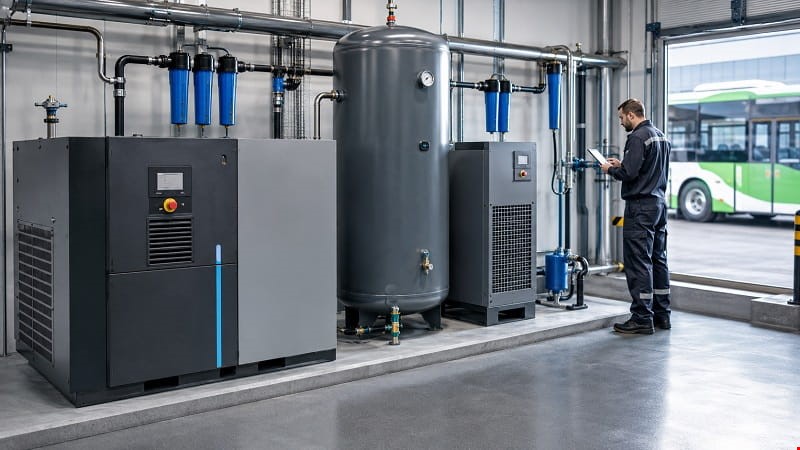
A complete compressed air setup may include:
- Compressor
- Air receiver tank
- Refrigerated air dryer
- Line filters
- Water separators
- Automatic drains
- Correctly sized piping
- Pressure regulation where necessary
- Routine leak inspection points
For most transportation environments, refrigerated dryers are commonly used to reduce moisture and provide dry air suitable for workshop and maintenance applications. In facilities with special requirements, harsh humidity conditions, long pipe runs or sensitive downstream equipment, additional air treatment solutions may be recommended.
Design, Installation and Service Considerations
A reliable compressed air system starts with proper planning. Before selecting a compressor, the facility should understand how much air is required, how many workstations operate simultaneously, what pressure is needed, where the compressor will be installed and how the piping system will distribute air throughout the site.
Important design questions include:
- How many technicians or workstations use compressed air simultaneously?
- Which tools and machines require the highest air flow?
- Is the air demand constant or variable?
- Would a VSD compressor be suitable for the facility's demand profile?
- Where should the compressor and air dryer be installed?
- Is there sufficient ventilation around the compressor?
- Are there long pipe runs that may cause pressure losses?
- Are there recurring leaks or unexplained pressure drops?
- Is there a plan for future expansion?
- Is the system protected against moisture and condensate accumulation?
EL-AV supports transportation facilities with system characterization, engineering design, installation, maintenance, repair services, spare parts and compressed air energy efficiency analysis. This approach allows the compressed air system to be planned as a complete operational solution rather than as a standalone equipment purchase.
Why Work With EL-AV for Transportation Compressed Air Systems
Transportation companies require dependable compressed air systems that support daily activity and reduce the risk of operational disruption. EL-AV Compressors provides solutions for transportation service providers by combining equipment, engineering expertise and professional service support.
EL-AV solutions for transportation facilities may include:
- Rotary screw compressors for continuous operation
- VSD screw compressors for variable demand and improved energy efficiency
- Piston compressors for smaller or intermittent applications
- Refrigerated air dryers for moisture control
- Line filters and water separators for improved air quality
- Zero-loss and timer drains for condensate management
- Air tanks for pressure stability
- Leak detection and compressed air system inspections
- Spare parts and maintenance kits
- Preventive maintenance programs
- On-site repair and technical service
- System design and energy efficiency analysis
The objective is to provide a compressed air system that matches the facility's operational requirements, supports daily maintenance activities and helps reduce unnecessary downtime, moisture-related issues, air leaks and energy waste.
Planning a Compressed Air System for a Transportation Facility?
If your transportation facility, fleet service center or maintenance workshop depends on compressed air, the system should be planned around actual operating conditions. EL-AV Compressors can help characterize your air demand, recommend suitable equipment and support the system with professional service, maintenance and repair.
Contact EL-AV to discuss a compressed air solution tailored to your transportation operation.
Frequently Asked Questions
What type of air compressor is best for a transportation facility?
The best compressor depends on the size of the facility and the air demand. Smaller workshops may use piston compressors for intermittent tasks, while large fleet service centers, rail workshops or busy maintenance facilities often require rotary screw compressors for continuous and stable operation. If air demand changes significantly throughout the day, a VSD screw compressor may also be recommended.
Why is dry compressed air important in transportation workshops?
Dry compressed air helps protect pneumatic tools, air lines, filters and connected equipment. Moisture in the air system can cause corrosion, reduce tool performance and increase maintenance problems.
Do transportation facilities need an air dryer?
In many cases, yes. A refrigerated air dryer is commonly recommended when compressed air is used regularly across a workshop or service facility. It helps reduce moisture before the air reaches tools and equipment.
How do I know if my transportation facility needs a larger compressor?
Signs may include pressure drops, weak pneumatic tools, frequent compressor cycling, slow pressure recovery, additional workstations or increased daily operating hours. However, these symptoms may also be caused by leaks, clogged filters, poor piping design or pressure losses, so a system assessment is recommended before replacing the compressor.
Is a screw compressor better than a piston compressor for fleet maintenance?
A screw compressor is usually better for continuous operation, multiple users and high daily demand. A piston compressor may be suitable for smaller facilities or occasional use. The right choice should be based on duty cycle, required air flow and operating hours.
When should a transportation facility consider a VSD compressor?
A VSD compressor may be suitable when air demand changes during the working day, such as in facilities with peak service hours, multiple workstations or variable tool usage. By adjusting output to actual demand, VSD technology can help improve energy efficiency and pressure stability.
Why are compressed air leaks a problem in transportation facilities?
Leaks waste compressed air, increase compressor operating hours, reduce pressure stability and raise energy costs. Leak detection and repair should be part of routine compressed air system maintenance, especially in busy workshops and large service facilities.
How can transportation facilities reduce compressed air energy costs?
Energy costs can often be reduced by repairing leaks, optimizing pressure settings, improving piping design, selecting the correct compressor size, using VSD technology where suitable, maintaining filters and dryers, and conducting a compressed air energy efficiency analysis.
What should be included in a transportation compressed air system?
A typical system may include a compressor, air receiver tank, refrigerated dryer, filters, drains, piping, pressure controls and ease of maintenance. Larger facilities may also benefit from VSD compressors, leak detection, energy monitoring, central control systems and structured preventive maintenance programs.